Archive for the ‘Leadership Vision’ tag
Leadership Vision – Easy as 1, 2, 3
The requirement for having a clear vision of the future is generally recognized as a universal element of effective leadership. Without a clear vision of the future it is impossible for the leader to know where he or she is going, much less convincing their team to follow them. Followers expect that their leaders will not only have a clear vision, but that they communicate it to them before they are willing to embark with them on a risky journey into the future. So how does a leader establish a vision of for the future? It may be as simple as one, two, three.
While nothing is ever as easy as it sounds, a concept can be elegantly simple even though it takes a skilled performance to make it look easy. Such is the case of defining a leader’s vision in three simple steps:
Step 1: Describe your current state. This step requires that you are brutally honest about the current state of affairs for you and your organization, even if things are not very rosy. You need to be honest about your people, resources, problems, strengths and weaknesses. You will also need to assess your operating environment both internally and externally. Once you have an accurate current appraisal of your situation, then you can move ahead to the next step.
Step 2: Describe your future state. This should be a more pleasant part of the exercise because you are generally describing a more hopeful future for your organization and your people. It is the time to think about your goals and outcomes. What would things be like if you could wave your magic wand to shape your organization in the future? Be sure to get into details just as you did in the first step, but don’t feel constrained by the current state of affairs.
Step 3: Define “close-the-gap” strategies. Now you will need to think creatively. Answer the basic question: “How do you intend to get from point A to point B, from the current to the future state?” You may have several strategies, but you should tie them together under a “grand strategy” or a concept. The supporting strategies can define more specific approaches to certain aspects of your concept. Individual strategies can be further refined into tactics. These are more discreet steps to take for the immediate future. One aspect of your strategic approach may be to gather the right resources and capabilities. These are usually defined in two broad categories: people and resources. Getting the right people on board who have the right skills is often one of the first steps that a leader must take to move ahead. This cuts to the core of the leadership challenge. Although leaders have the overall responsibility for the success of their organization, they need to have the right team of people around them to make sure that everything that needs to get done actually does get done. Picking the right people is a key leadership responsibility. Likewise, making sure that the people have the necessary resources is also a key leader responsibility. These are often some of the first “close-the-gap” strategies, but the basic requirement in this step is to articulate the strategies and actions necessary to guide the team into the future.
So this is a simple, three-step process for defining the leader’s vision: 1) describe the current state, 2) describe the future state, and 3) define the close-the-gap strategies. The process can be more complex or take more time depending on the individual situation. Some leader’s find themselves in dire circumstances and don’t have the luxury of time to get lots of input to forge ahead. If this is the case, a leader may make a personal reconnaissance of the situation and get input from just a few key people before deciding what to do. In other circumstances, a leader might have more time because things don’t seem so desperate. In these cases leaders will often bring more people into the discussions over an extended period of time. For example, the leader might even designate several teams of people, one for each of the steps. This could be the same people or a mix of different people who are hand-picked by the leader for their expertise in a particular aspect of the discussion. How this gets done will be determined in part by the leadership style of the leader. Nevertheless, these are all just variations of the same, simple three step process. So if you become the leader of an organization or team, think about using this three step process to come up with your vision. It could be as easy as one, two, three. Best wishes in seeing your future success!
This post has been submitted for publication as an article at ezinearticles.com
To view other articles by the author:click here
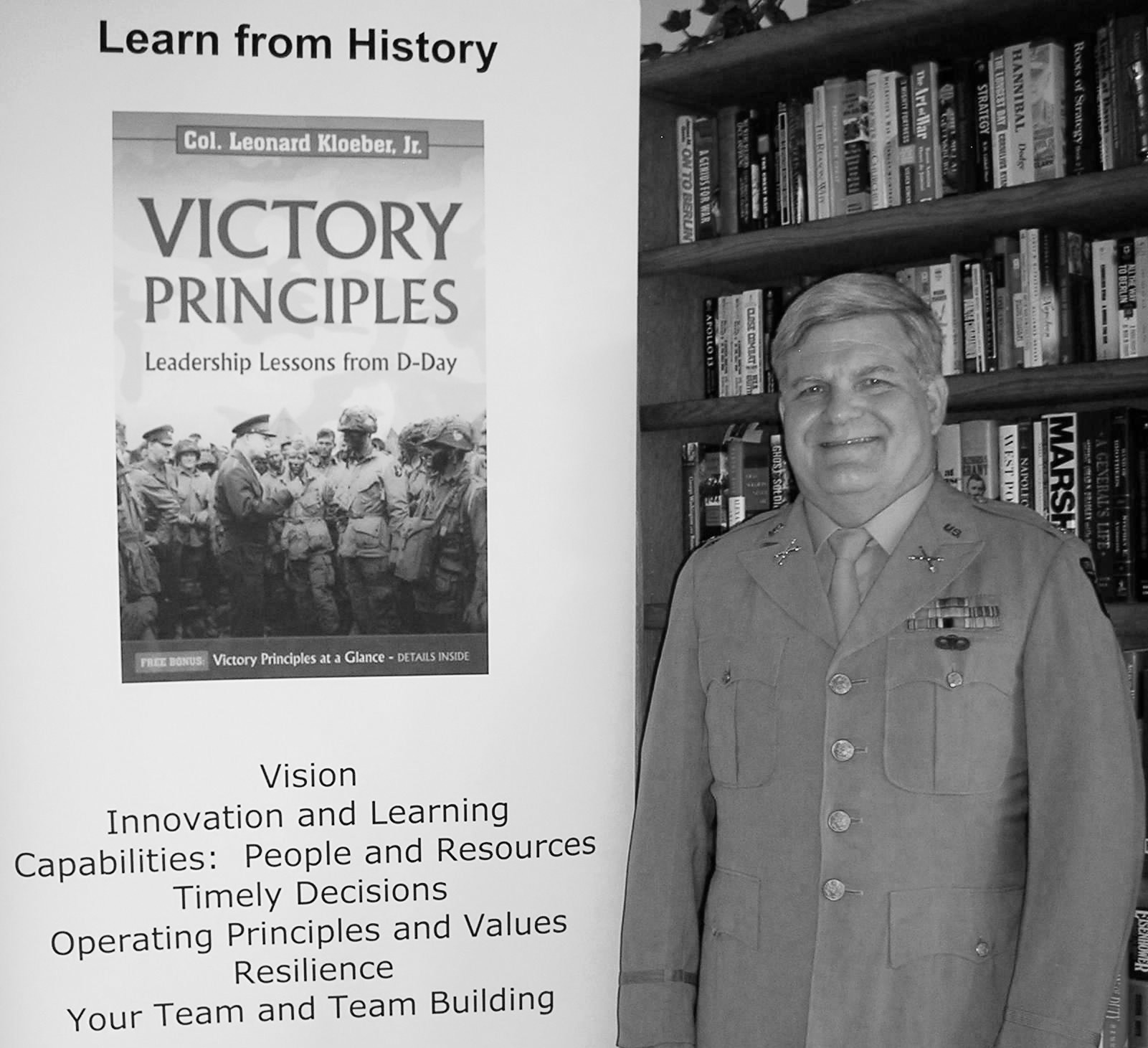
COL. Leonard Kloeber, Jr. Author


